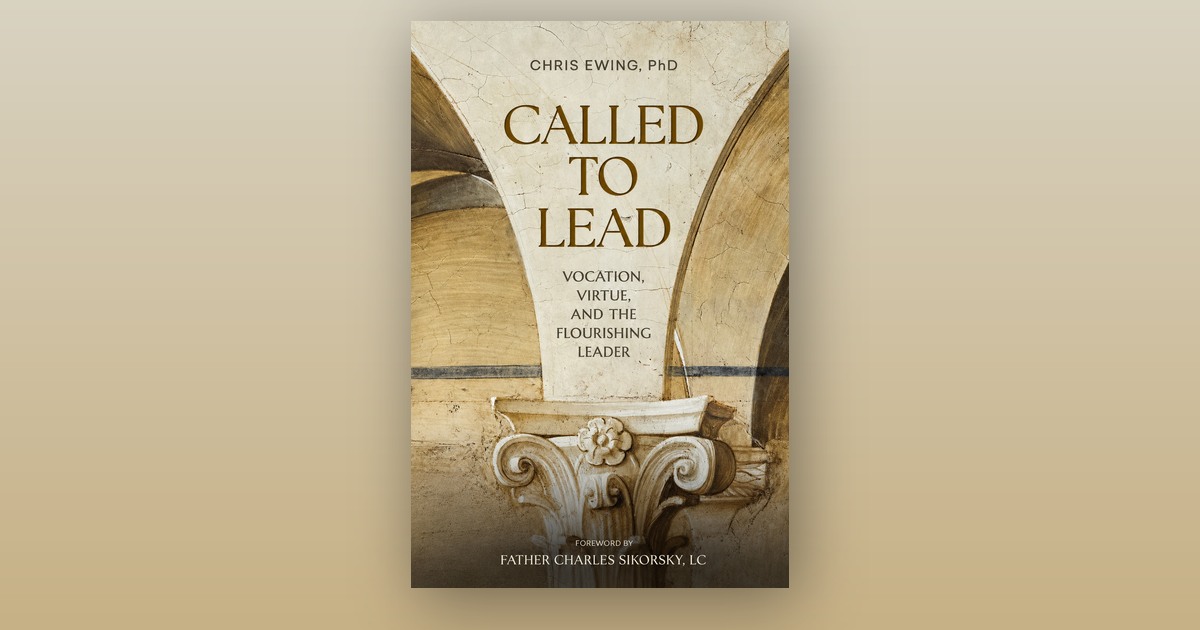
“Called to Lead”: Groundbreaking Text Applies Catholic Anthropology to Leadership
Most texts on leadership fail to form leaders. They offer helpful tips, experiential insights, tactics and skills that would render the leader more effective; nevertheless, these self-help guides neither intend nor were intended to change the character of the leader in any lasting or substantial way. They reduce leadership to effective skills and overlook the personal development of the leader.
Chris Ewing, PhD wrote Called to Lead: Vocation, Virtue, and the Flourishing Leader in response to that deficit.
We spend an enormous amount of time teaching leaders what to do, but much less time asking who the person is who leads and who that person is becoming.
Chris Ewing, Called to Lead
From Efficiency to Flourishing: A New Education in Leadership
“At Divine Mercy University,” Ewing said, “the Catholic Christian Meta-Model of the Person gave me the anthropology I had been looking for. I began to wonder what would happen if we took that account of the human person seriously in leadership. Once you do that, questions of authority, virtue, suffering, prayer, responsibility, and even organizational success begin to look different.”
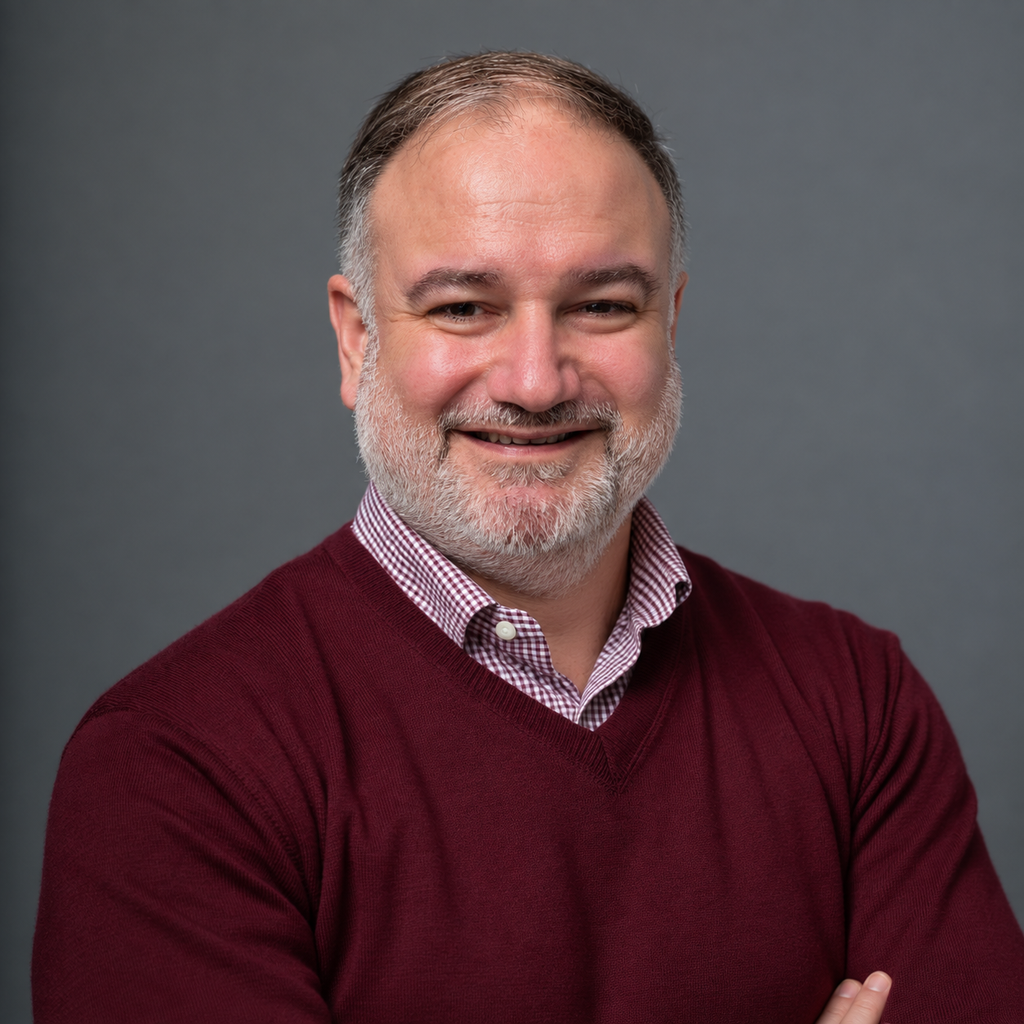
Ewing teaches leadership and applied psychology at DMU as an adjunct faculty member, and he approaches the subject from personal experience rather than research alone. He spent eight years as an officer in the United States Air Force, first in space and missile operations and later as an electronic warfare officer deployed to Mosul. From there he entered healthcare and federal operations, running biomedical engineering teams and large clinical call centers. He holds a doctorate in educational psychology, serves as associate professor and doctoral chair at Touro University Worldwide, and is a candidate for the permanent diaconate in the Diocese of Orlando.
What the Meta-Model Supplies
The Catholic Christian Meta-Model of the Person was built at DMU for clinicians. It describes the human being as created and fundamentally good, wounded by disorder, and capable of healing: an account developed over years by William Nordling, Paul Vitz and Craig Steven Titus for the consulting room and the classroom. Called to Lead asks what happens when that same account of the person is carried into an office, a parish, a hospital administration, a command.
The answer runs through the book’s five parts and fourteen chapters: vocation, virtue, prudence, authority held in trust, the dignity of the person, prayer, suffering, the common good. The sequence moves from anthropology to the leader’s interior life, then outward to the leadership of others, then to prayer and vocation, and finally to practical formation.
Fr. Charles Sikorsky, LC, president of Divine Mercy University, writes in his foreword that the extension was always latent in the work of the CCMMP:
That work was developed primarily for psychology and the clinical professions, but… its implications go well beyond those fields. That is where this book begins. Extending the CCMMP to leadership is not work we undertook ourselves, and I have not seen anyone else attempt it with this seriousness.
Measuring Something Nobody Had Measured
Dr. Julia Klausli, Director of the Master’s Program in Psychology at DMU, had spent more than a decade teaching the Meta-Model to students. She saw the same gap Ewing did: “While we have a lot of resources on using the Catholic Christian vision of the person for clinical mental health work, we do not really know how it relates to leadership practice,” she said.
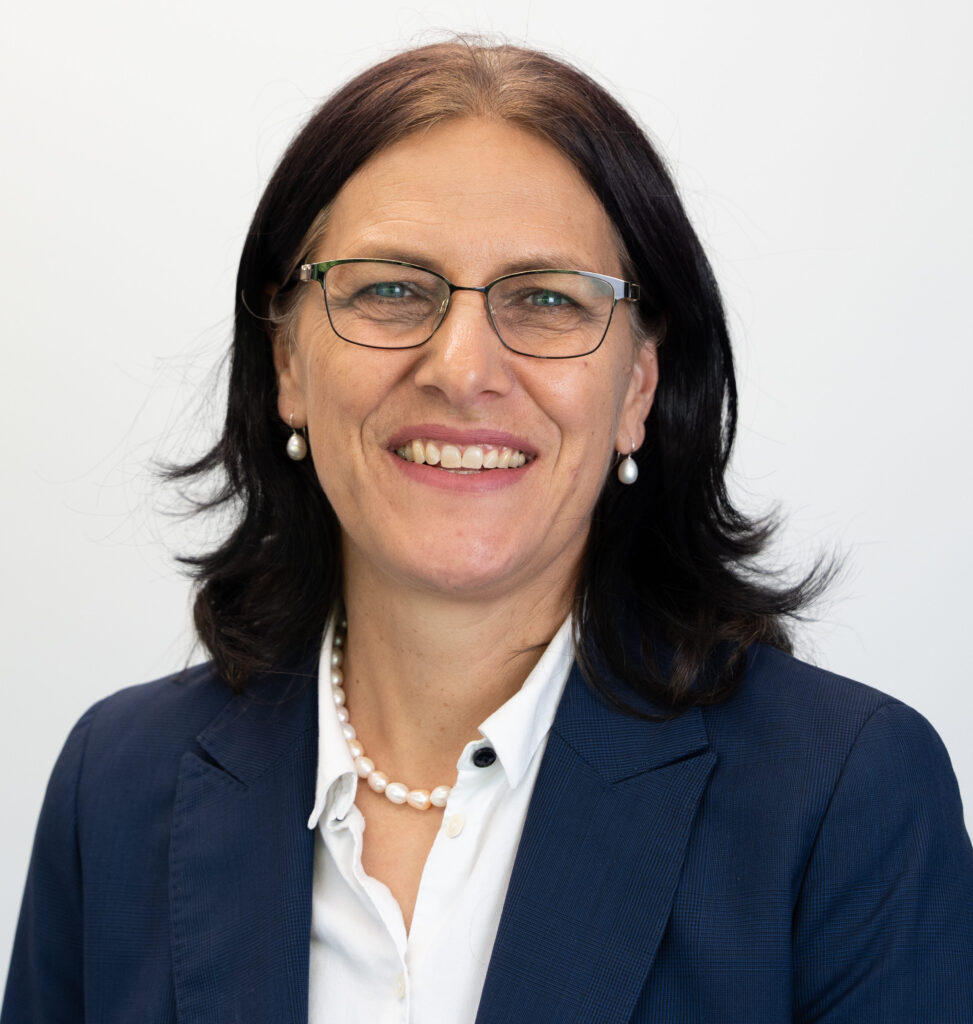
Working alongside Dr. Julia Klausli, Ewing sought to build a quantitative tool that could measure key components of leadership. The result was the creation of the Flourishing Leadership Scale.
An IRB-approved qualitative study of thirteen Catholic leaders helped define the lived dimensions of flourishing leadership and generate the initial item pool for the Flourishing Leadership Scale. Ewing and Klausli then refined and quantitatively tested the instrument with Catholic leaders, identifying three dimensions: Transcendent Orientation and Discernment, Justice and Stewardship of the Common Good, and Prudential Self-Governance. A later study tested the structure with a broader sample of Christian leaders
Klausli indicates why this is not one more leadership instrument. “Over the last several years a number of character-oriented leadership models have been developed: ethical leadership, virtuous leadership, servant leadership, to name just a few,” she said. “However, while these models include concepts like transcendence, spirituality, or general morality, none are based consistently on a Christian theological anthropology in which the leader defines their vocation in relation to God and virtues of charity, justice, and prudence define the disposition of the leader.”
Dr. Klausli added, “We developed the Flourishing Leadership Scale not only to introduce a leadership style that aligns with a Christian anthropology but also to have a tool to guide leaders into self reflection.”
The Difference Between a Leader and a Dictator
Power and authority alone do not make a leader, but a dictator; one whose word is followed in spite of the followers’ desires, hopes, or personal goals. A true leader does not coerce but cooperates with the wills of those entrusted to his care.
Called to Lead returns to this distinction repeatedly, and it is why anthropology matters. If the people being led are a resource, authority is a lever. If they bear the image of God, authority is something held on their behalf and answerable to them.
Leadership is a form of vocation. Authority is a trust. The dignity of those you lead is the dignity of the image of God.
Chris Ewing, Called to Lead
The argument implied throughout the book is the leader must regulate a desire for power and efficiency with the love of others and the recognition that he too is subject to Authority. Far from limiting the leader’s flourishing, viewing leadership as a stewardship from God makes one far more intentional to realities and relationships that contribute to a sense of meaning, motivation, and fulfillment.
Praise for Called to Lead
Twenty readers endorsed the manuscript before publication, among them a bishop, two seminary rectors, a mother general, and the heads of three national Catholic organizations.
Tracey Rowland, who holds the St. John Paul II Chair of Theology at the University of Notre Dame Australia and sits on the Pontifical Academy of Social Sciences, calls it “an important contribution to the understanding of what makes Catholic leadership distinctive,” and says it “should be mandatory reading for anyone in a leadership position in a Catholic institution.”
Andrew V. Abela, dean of the Busch School of Business at The Catholic University of America, writes that the book “brilliantly bridges modern empirical psychology and the timeless truths of Christian anthropology.”
Bishop Robert P. Reed, auxiliary bishop of Boston, rector of St. John’s Seminary and president of the CatholicTV Network, says it “moves beyond technique and efficiency to the deeper question of who a leader is becoming before God.”
Paul C. Vitz, professor of psychology emeritus at DMU, and one of the architects of the Meta-Model the book is built on, calls it “a new classic” and say it is “essential for anyone with an interest in leadership.”
Called to Lead: Vocation, Virtue, and the Flourishing Leader is published by Spirit of Wisdom Press, $21.95 in paperback. ISBN 978-1-968630-05-8.
Called to Lead can be ordered at spiritofwisdompress.com. More on the author’s work at vocationandvirtue.org.
Disclosure: Called to Lead builds on the Catholic Christian Meta-Model of the Person, developed at Divine Mercy University. Its foreword is by DMU’s president, its research is co-authored with DMU faculty, the author teaches at DMU.